How to Remove Dried Red Wine from a Wool Carpet
See how cold acid-and-soap blotting protects delicate protein fibres without chlorine bleach or steam.
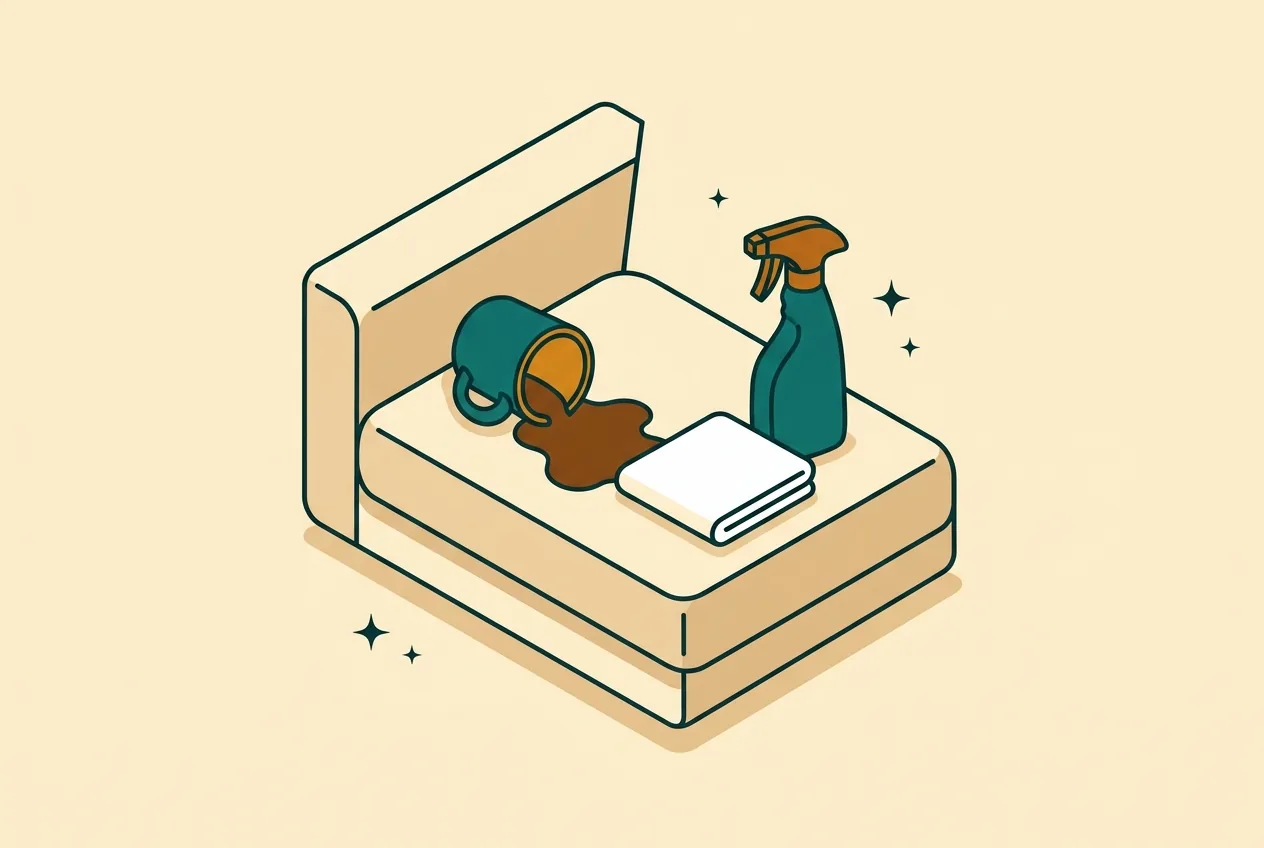
W, WS, S or X). Blot wet coffee upward with clean white towels — never scrub. On water-safe W or WS fabric, start with cold water (never hot, especially on lattes or milky tea), blot gently with a wrung cloth dipped in 1 tbsp clear dish soap + 1 tbsp white vinegar in 2 cups cold water, rinse with a damp cold distilled-water cloth, then press weighted dry towels for 30 minutes and fan-dry so no brown tide ring forms. Use water-free dry solvent only on S tags.S-coded or X-coded sofa. Viscose, velvet, rayon, silk and unsealed linen develop permanent brown cellulose tide rings and stiff patches the second water or vinegar touches them.Before touching a cloth to the seat, verify both your fabric code and what was in the mug (if another spill happened on carpet or clothes nearby, check our interactive Stain Solver).
Look for W, WS, S or X — and remember whether it was black filter coffee or a milky latte.
W or WS upholstery (microfibre, polyester, treated cotton)Use cold clear dish soap + diluted white vinegar on a tightly wrung cloth. If milky coffee smells sour, treat the protein film with clear soap (or a brief enzyme wipe) before mild acid.
S or X upholstery (velvet, viscose, raw silk, dry-clean linen)Stop all water, soap and vinegar. Blot dry only, dab gently with a water-free S-code upholstery solvent with windows open, or call an upholstery cleaner for X.
W/WS tags; distilled water avoids mineral rings on pale linen/cotton)S-coded sofas only)W and WS sofas (black vs milky coffee)Mix 1 tablespoon of clear mild dish soap and 1 tablespoon of distilled white vinegar into 2 cups (500 ml) of cold water. (If the spill was a rich milky latte or creamer drink, do one plain cold dish-soap pass first without vinegar, then switch to this mix once dairy fat is lifted.)
Why this works: Mild acetic acid keeps coffee's plant tannins soluble so they transfer into your towel rather than gripping fabric dye sites, while clear dish soap emulsifies roasted coffee bean oils and dairy fats without optical brighteners.
S-coded sofas (velvet, viscose, rayon, dry-clean linen)Half of all "ruined" beige sofas happen after the coffee actually came out — when leftover moisture carries dissolved fabric sizing or dust outward into a sharp yellowish halo. Keep moisture strictly on the surface, just as we advise in our low-moisture sofa and mattress blotting guide:
| Method | Safe on W / WS? | Safe on S fabric? | Key pitfall |
|---|---|---|---|
| Cold clear dish soap + 1 tbsp vinegar (wrung cloth + rinse) | Yes | No — water rings | Over-wetting cushion foam |
| Water-free dry-cleaning solvent | WS only (test first) | Yes | Strong fumes; needs open windows |
| Cold enzyme spotter (milky coffee) | Yes (avoid silk/wool) | No | Sticky if not rinsed with damp cloth |
| 3% hydrogen peroxide spot dab | Pale synthetics only | No | Bleaches dye on coloured/natural fabric |
| Hot water / steam or baking soda paste | No — sets dairy & darkens tannins | No | Chalky crust + permanent halo |
On a faint dried coffee shadow sitting on a pale, colourfast W-coded synthetic couch only, you may spot-test ½ tsp oxygen bleach (sodium percarbonate) in 1 cup cool water for 20 minutes, then blot rinse and fan-dry — skip oxidisers completely on wool, linen or medium-to-dark upholstery.
Press dry white towels straight down without rubbing and check W, WS, S or X under the cushion.
Dab inward with a wrung cloth (or dry solvent on S-code), then rinse with plain cold distilled water.
Pull dampness up under weighted white towels and run a fan so zero brown tide rings set.
X (vacuum and soft brushing only — no water or dry solvents).S-coded velvet, viscose, silk or unsealed linen cushion and already dried into a stiff brown ring.Always use cold water first, particularly for milky coffee, lattes or tea with creamer. Warm water partially sets dairy proteins into upholstery fibres and creates stubborn yellowish rings.
Wait until the spot is completely clean and dry, then dust lightly for 30 minutes only if a sour milk smell lingers before vacuuming. Putting wet baking soda onto fresh or dried coffee darkens plant tannins, and mixing vinegar onto baking soda neutralises both cleaners.
That outline is a water tide ring left when excess liquid carried dissolved dust or fabric finish to the drying edge. Using a barely damp wrung cloth, distilled water rinsing, weighted dry towels and a fan stops it.
Usually not without a 10-minute hidden test — and never on wool, silk, linen or dark fabrics, because 3% hydrogen peroxide can strip fabric dye permanently.
See how cold acid-and-soap blotting protects delicate protein fibres without chlorine bleach or steam.
Check material-safe stain and moisture rules for wool carpet, synthetic pile, hardwood and laminate.

Written by Miah Elias, home cleaning researcher and writer. Methods are checked against upholstery cleaning codes and basic dye chemistry. This guide contains no affiliate links — ingredients are named generically so you can start with what is already in the kitchen.