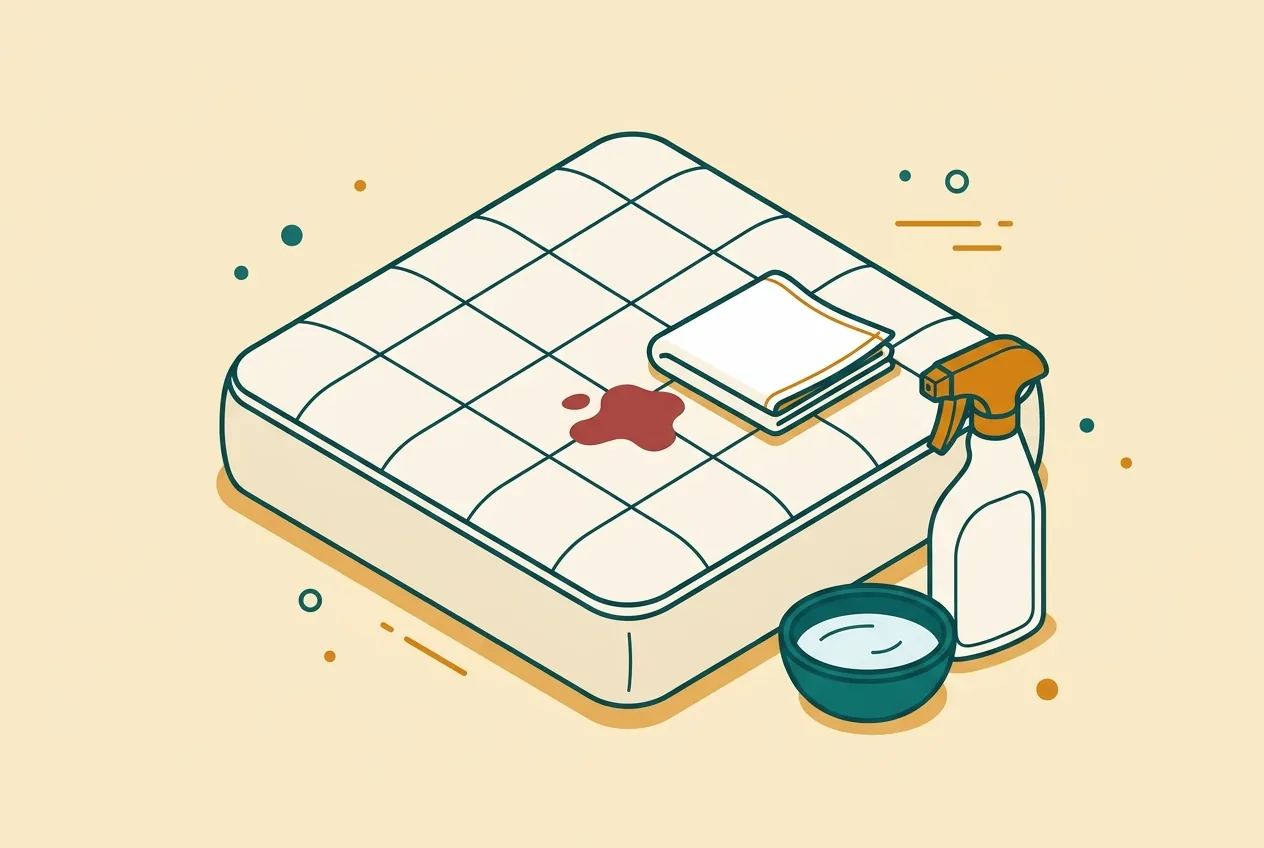
How to Remove Fresh or Dried Blood from a Mattress or Sofa Safely
By Miah Elias · Published 24 November 2026 · About 6 minutes
Cold water and low moisture do the heavy lifting — heat cooks blood permanently into fabric and soaking feeds hidden foam mould.
Quick answerUse ice-cold water only, applied with a wrung-out white cloth — never hot water, steam or pouring straight onto foam. For fresh stains, blot with cold water and a drop of clear dish soap; for dried rust-brown marks on white mattress ticking, dab 3% hydrogen peroxide sparingly and blot up the fizz immediately, then force-dry with a fan. On coloured sofas, check the upholstery tag first and use a cold protease enzyme cleaner instead of peroxide.
Safety & fabric rules before you start
Never use warm water, hot water or a steam cleaner. Heat coagulates haemoglobin proteins inside the fibre — turning an easy stain into a permanent brown shadow.
Never soak a memory-foam mattress. Memory foam traps water deep inside its cells where it breaks down glue and grows hidden mildew. Always dampen your cloth, never the mattress.
Check your sofa's cleaning code first. Look under the cushions for W (water-safe), WS (water or solvent), S (dry-cleaning solvent only — water leaves tide rings), or X (vacuum only).
Test 3% hydrogen peroxide on a hidden flap before using it on coloured fabric, wool, linen or silk — peroxide can lift dye.
Why blood stains are tricky on mattresses and sofas
Unlike removable bedsheets — which you can soak in cold water following our laundry care hub — you cannot rinse a mattress under a cold tap. Blood contains haemoglobin protein bound with iron. When blood dries, proteins cross-link tightly to cotton ticking and upholstery weave, while iron oxidises from bright red to stubborn rust-brown.
Scrubbing spreads pigment outward and damages delicate weave in the exact way scrubbing felts natural pile in our wool carpet rescue guide. Gentle pressing with cold moisture pulls pigment upward into your cloth instead of driving it down into the cushion padding.
Step 1 — Lift as much pigment as possible with ice-cold water (free)
Strip off sheets and mattress protectors straight away and rinse them under a cold running tap before washing cold (follow our dried blood on clothes and sheets guide if marks have already dried onto removable fabric).
Wet a clean white cloth in ice-cold water and wring it until merely damp — no drips.
Press firmly onto the outer edge of the stain and work inward toward the centre. Fold to a clean dry section of the cloth and press again to draw blood up.
If the mark is fresh, mix 1 teaspoon of clear mild dish soap (or 1 tablespoon of table salt) into a cup of cold water, dab lightly with a damp cloth, wait 5 minutes, and blot clean with plain cold water.
Step 2 — Break down dried or stubborn blood safely
Once cold water stops pulling colour onto your white cloth, choose the safer chemistry for your surface:
Which blood remover fits your mattress or sofa
Method
Best for
Colour-safe?
Notes
Cold water + clear dish soap
Fresh spots on W/WS fabric
Yes
Free first pass; keeps moisture minimal
3% hydrogen peroxide (dabbed)
Dried blood on white mattresses
May bleach dyes
Breaks haemoglobin rapidly; blot fizz off within 2 minutes
Cold protease enzyme cleaner
Dried blood on coloured W/WS sofas
Usually (spot-test)
Avoid on silk or wool; needs 15 min damp dwell
Chlorine bleach or hot steam
Never on mattresses or upholstery
No — yellows & sets
Yellows white ticking and cooks protein permanently
For white mattresses (3% hydrogen peroxide method)
Dab a small amount of 3% hydrogen peroxide onto the spot using a cotton bud or corner of a white cloth — do not pour from the bottle.
Watch it fizz gently for 60–90 seconds as it breaks down blood proteins, then immediately press a clean dry white towel onto the area to lift both foam and stain.
Repeat two or three light rounds rather than one wet soak, then blot with a barely damp cold-water cloth to remove leftover peroxide (which can yellow cotton in sunlight if left unrinsed).
For coloured sofas & upholstery (protease enzyme method)
Confirm the tag reads W or WS and spot-test a protease enzyme stain remover on an underside seam for 10 minutes.
Lightly mist a white cloth with the enzyme cleaner and press onto the stain — the same biological protein-digesting action explained in our enzymatic odour removal guide — letting it sit damp for 15 minutes.
Blot away thoroughly with a cold-water damp cloth so no sticky surfactant remains to attract dust.
Step 3 — Draw out moisture and force-dry completely
Even a small damp patch sealed under fitted sheets can trap musty mildew inside mattress foam (a moisture trap we cover across our odour and mould hub):
Fold two dry white bath towels over the cleaned spot and press down firmly (or place a heavy stack of books on a plastic sheet over the towel) for 20 minutes to wick hidden dampness out.
Remove the towels and point a standing fan across the bare mattress or cushion for 2–4 hours until cool and completely dry to the touch.
If a faint water ring appears on upholstery after drying — a common edge mark also tackled in our red wine sofa and upholstery guide — lightly feather the ring edge with a barely damp microfibre cloth and dry immediately with the fan.
When to call an upholstery professional
Your sofa label is marked S (solvent only) or X, or the fabric is raw silk, velvet or untreated linen.
A large spill soaked deep into memory foam or sprung mattress padding and still smells damp after drying.