How to Get Dried Blood Out of Clothes (Even After Washing)
By Miah Elias · Published 28 November 2026 · About 7 minutes
Cold water flushing from the backside and a simple backing barrier stop haemoglobin from printing through to the back of your shirt.
Quick answerUse ice-cold water only until every trace of red or brown is gone — never warm water and never the tumble dryer. Slip a folded white towel or scrap card inside the garment, flush the stain from the backside under cold water, then soak dried stains in cold water for 30–60 minutes before rubbing in clear dish soap or a cold protease enzyme detergent (skip biological enzymes on silk and wool). Reserve 3% hydrogen peroxide for white or colourfast-tested garments, wash cold, and air-dry completely.
Read this first — four laundry mistakes that set blood permanently
Never wash warm or toss the item in the tumble dryer to "see if it came out". Heat cooks haemoglobin protein into a permanent rust-brown bond — the exact same protein rule covered in our dryer-safe laundry stain guide.
Never pour 3% hydrogen peroxide blindly onto dark, patterned or delicate clothes. Peroxide is a mild bleaching oxidiser that frequently strips dye on navy jeans, dark cotton and linen, and weakens wool and silk.
Keep biological (enzyme) detergents off silk, cashmere and wool. Protease enzymes digest proteins — which means they slowly attack silk and wool fibres right alongside the blood stain.
Never mix chlorine bleach with vinegar or ammonia on white sheets. Chlorine bleach also yellows protein residues and reacts dangerously with household acids.
Fresh blood is mostly water-soluble red haemoglobin. As blood dries on a shirt, collar or bedsheet, water evaporates, protein chains cross-link tightly around cotton and polyester yarn, and iron oxidises from crimson to dark rust-brown — the identical chemistry that makes dried blood on mattresses and sofas harder than fresh drops.
If a garment already went through a warm wash, the outer soluble blood may be gone while cooked protein and iron remain bonded inside the thread. Even then, cold enzyme digestion followed by a cool oxygen-bleach soak often rescues cotton, denim and synthetics as long as you have not repeatedly baked it in a hot dryer.
First: check whether your stain is fresh, dried, or washed-in
Step A: Check the care label (cotton/poly vs silk/wool) and stain age
Always confirm fibre type before grabbing enzymes or peroxide (for other spills on clothes, check our Stain Solver).
↓
Fresh or dried on washable cotton, denim, linen or polyester
No enzymes, no peroxide and no warm water. Blot with ice-cold water + 1 drop neutral clear dish soap or cold salt water, rinse cold, or take straight to a dry cleaner.
What you'll need
Ice-cold tap water and a clean basin or sink (free)
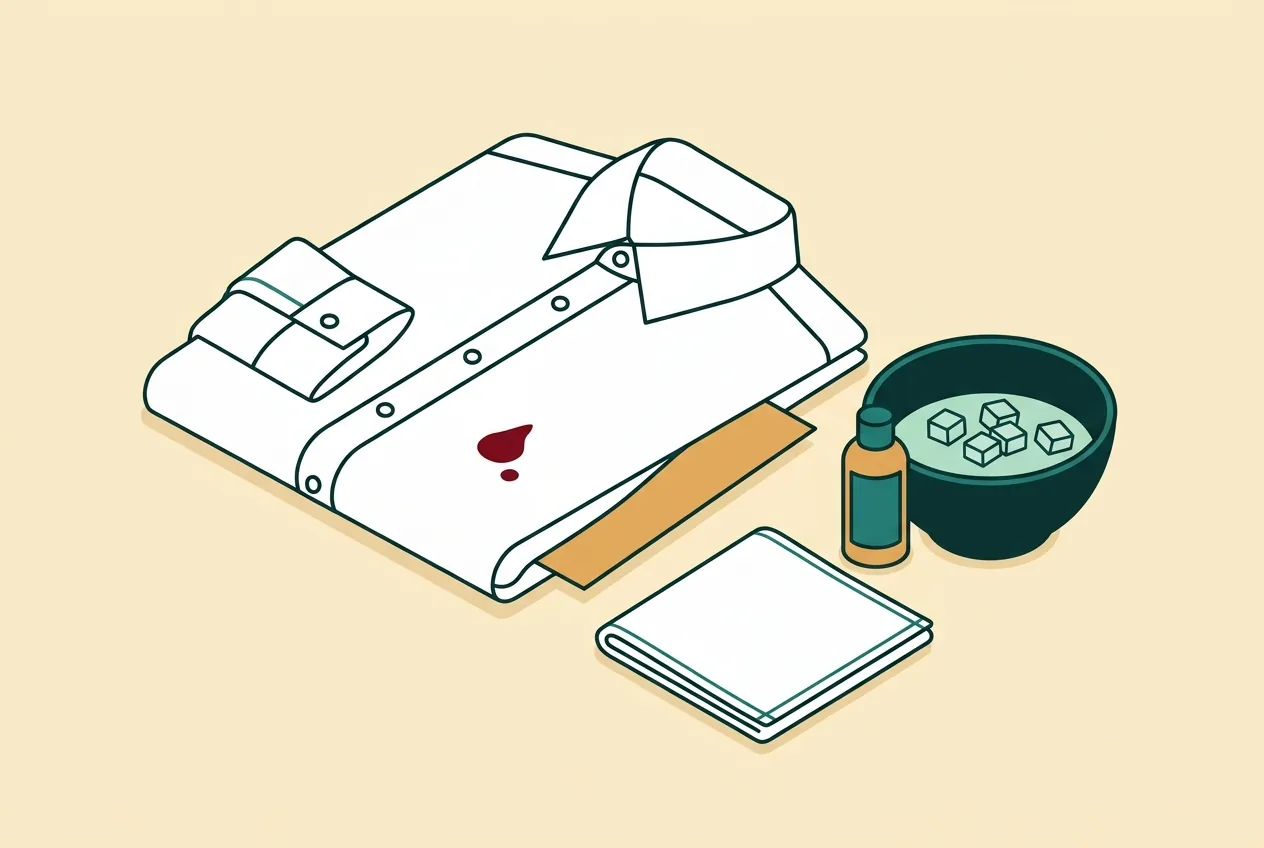
A scrap of flat cardboard or folded white towel (free backing barrier so stains don't transfer onto the back panel)
Clear mild dish soap or laundry soap bar (free household option for all washable fabrics, including silk/wool hand-washing)
Optional for lingering rust-brown shadows on colourfast cotton/synthetics: oxygen bleach (sodium percarbonate) — or 3% hydrogen peroxide for plain whites
Step 1 — Flush from the backside in ice-cold water (free)
If dried blood left a hard crust, gently scrape loose flakes off with a blunt butter knife before wetting.
Hold the stained fabric single-ply (or tuck a folded white towel/cardboard sheet inside the shirt or trousers) and run ice-cold tap water through the wrong side (backside) of the stain for 60 seconds so loosened blood pushes out the way it entered rather than driving deeper.
For dried stains, submerge the whole item in a basin of cold water for 30–60 minutes (add 2 tablespoons of plain table salt per litre of cold water if treating delicate silk/wool or when you don't have enzyme detergent at home).
Step 2 — Break down the protein and iron shadow
Option A: Dark colours, prints & everyday cotton/synthetics (protease enzyme method)
Lay the damp garment flat over your folded white backing towel.
Apply undiluted liquid protease enzyme laundry detergent (or an enzyme stain spray, or a wet laundry soap bar) directly onto the stain and massage gently with your fingertips — never scrub hard on dark cotton or knits, which chafes dye into a pale fuzzy patch.
Let it sit damp for 20–30 minutes (never let it dry out in warm sun), then rinse thoroughly with cold water.
Why this works: Protease enzymes specifically chop stubborn haemoglobin protein chains into short, water-soluble fragments at low wash temperatures — the same targeted biological breakdown we use against odour-causing residues in our activewear cold-soak reset guide.
Even on pale fabrics, dab a tiny drop on an inside hem first and wait 10 minutes to verify colourfastness.
With your backing towel tucked underneath, dab 3% hydrogen peroxide onto the stain with a cotton bud or clean cloth. Watch it fizz gently for 2–3 minutes as catalase in blood reacts with peroxide.
Blot away the lifted brown foam with a clean damp cold cloth and rinse thoroughly under cold water before washing (leftover peroxide dries yellowish on cotton in sunlight).
Option C: Old or accidentally washed-in stains (cool oxygen bleach soak)
If an iron-brown shadow stayed behind after a warm wash or one trip through the dryer on sturdy white or colourfast cotton/polyester:
Dissolve 1 scoop of powdered oxygen bleach (sodium percarbonate) fully in a small cup of warm water first, then stir it into a bucket of cool-to-lukewarm water (not hot).
Submerge the garment and soak for 4–8 hours or overnight, checking colourfastness beforehand.
Step 3 — Wash cold and air-dry in daylight
Wash on a cold cycle (20°C–30°C maximum) with regular detergent. Do not add chlorine bleach.
Hang to air-dry completely and check the spot in bright natural daylight before ever putting it near a tumble dryer. Repeat Step 2 once more if a faint shadow remains.
Blood stain methods on clothes compared
Laundry blood stain removers compared by fabric safety
Method
Works on dried/washed blood?
Safe on dark dyes?
Safe on silk & wool?
Cold backside flush + clear dish soap
Best on fresh/recent
Yes
Yes (cool hand wash)
Protease enzyme detergent (cold soak)
Best on dried protein
Yes (spot-test)
No — weakens wool & silk
Oxygen bleach (sodium percarbonate) cool soak
Best on old/washed shadows
Spot-test colours first
No
3% hydrogen peroxide
Fast on whites
Often fades dark dyes
No
Warm/hot wash or chlorine bleach
Cooks protein permanently
No
No — ruins fibres
What about saliva? Your own fresh saliva contains amylase/protease enzymes that genuinely help on a tiny fresh pinprick spot on your own shirt in an emergency — though cold running water and clear dish soap are far cleaner and more effective at home.
Minute 1 · Flush
Cold backside rinse
Tuck a backing towel inside and flush cold water through the reverse side — never hot water.
30 mins · Digest
Soak + enzymes
Soak dried spots cold, then work in protease detergent (or dish soap on wool/silk, peroxide on whites).
Finish · Air-dry
Cold wash & check
Launder cold and air-dry completely in daylight before ever letting the item near a tumble dryer.
When to call a dry cleaner instead
The garment is tagged Dry Clean Only, or is structured wool tailoring, silk blouse fabric or delicate lace — point to the exact blood spot so the cleaner avoids steam-pressing it first.
Dark fabric already faded from an un-tested peroxide or chlorine bleach splash — cleaning cannot restore stripped dye.
FAQ
Can you get dried blood out of clothes that have already been washed and dried?
Often yes if it was only washed once without extreme dryer baking. Rehydrate in cold water, pre-treat with a cold protease enzyme detergent for 30 minutes, then soak 4–8 hours in a cool oxygen-bleach bath before washing cold and air-drying.
Does hydrogen peroxide bleach coloured clothes?
It can. 3% hydrogen peroxide is a mild oxidising bleach that frequently lightens navy denim, dark cotton and dyed linen, and weakens protein fibres such as silk and wool. Always test an inside hem first or stick to cold enzyme detergent on dark colours.
Why should you never use hot water on blood stains?
Hot water cooks haemoglobin proteins in blood almost instantly, turning a washable red mark into a permanent iron-bound rust stain.
Is cold salt water actually useful for dried blood?
Cold salt water helps draw moisture and loose haemoglobin out of fresh or lightly dried stains on sturdy fabrics, though cold protease enzyme detergent breaks down aged dried protein far more reliably.
Keep cold-wash laundry smelling fresh by clearing soap-scum biofilm and hidden pump traps inside front-loaders.
Written by Miah Elias, home cleaning researcher and writer. Methods are checked against textile care guidance and basic protein chemistry. This guide contains no affiliate links — ingredients are named generically so you can start with cold water and soap.