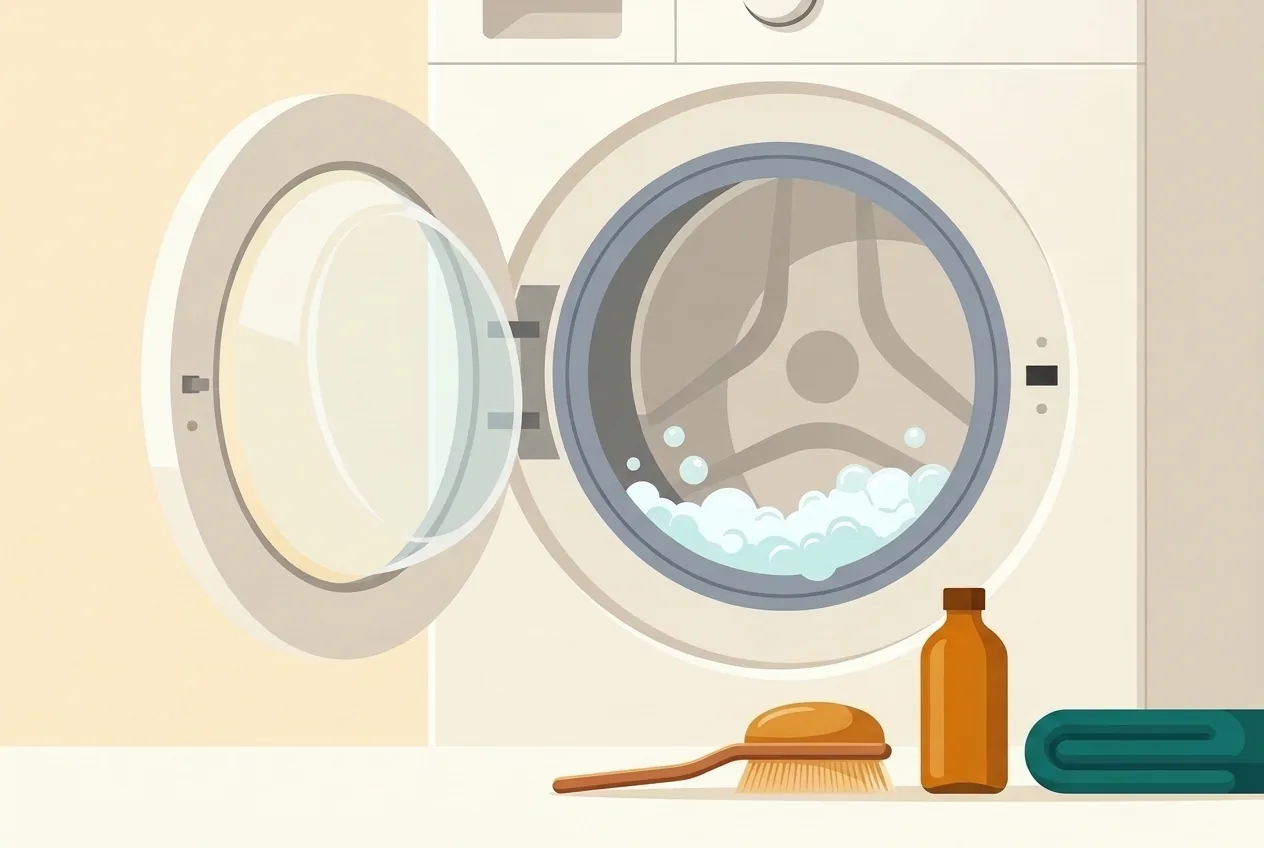
Black Mould in Washing Machine Rubber Seal? Clean the Gasket and Stop the Smell
By Miah Elias · Updated 20 November 2026 · About 7 minutes
Remove slimy detergent biofilm first — and remember that faint dark rubber staining often stays even after every live spore is gone.
Quick answerTo stop musty towels and clear slimy black mould inside a front-loader door seal, pull back the gasket folds, wipe out hair and greasy soap residue first with warm water and clear dish soap, then pack paper-towel strips soaked in 3% hydrogen peroxide (or an oxygen-bleach paste) into the folds for 30 minutes. Flush the hidden detergent drawer and drain-pump filter, run a hot empty tub-clean cycle with citric acid, and leave the door cracked open after every wash.
Read this first — avoid toxic gas and perished rubber seals
Never combine chlorine bleach with vinegar, citric acid or descalers. Many online guides suggest wiping the seal with bleach and then running a vinegar tub wash straight after — leftover bleach inside the folds can react with acid to create toxic chlorine gas. Pick one chemistry and flush thoroughly between steps.
Be cautious with undiluted chlorine bleach on EPDM rubber. Appliance manufacturers commonly warn that straight bleach or long overnight bleach soaks stiffen, crack and swell door bellows, and void gasket warranties.
Wear gloves and unplug or switch off the machine before pulling back the seal or opening the lower drain-pump trap.
Live mould vs permanent rubber pigment — the gap most guides skip
One of the biggest frustrations on cleaning forums is scrubbing a front-loader seal until your fingers ache, yet seeing dark blotches stay behind. Here is what is actually happening:
Biofilm and live mould feel slimy, fuzzy or greasy when wiped with a white tissue, smell damp or earthy, and leave grey-black residue on the cloth. That active growth must come off completely.
Permanent melanin staining happens when old mould penetrates microscopic pores in grey EPDM rubber. Even after every live spore and musty smell is dead, faint dark "freckles" can remain dyed into the rubber itself. Knowing the difference stops you from ruining the seal with harsher chemicals chasing a cosmetic mark.
It is the exact same distinction between surface bleaching and deeper treatment explained in our shower grout mould guide.
What you'll need
Rubber gloves and old rags or paper towels (free first step)
Warm water and clear liquid dish soap
Soft-bristled toothbrush (never wire or stiff scouring pads that nick rubber)
3% hydrogen peroxide or oxygen bleach powder (sodium percarbonate)
Food-grade citric acid powder (or a commercial washing-machine cleaner tablet) for the hot drum flush
A shallow baking tray and old towel (for draining the lower pump filter)
Step 1 — Strip the slime and trapped debris first
Skipping straight to peroxide or mould gel fails because slimy fabric-softener and detergent residue shields mould underneath — the same oily barrier that traps bacteria inside clothes in our guide to gym clothes odour rebloom.
Gently fold back the outer lip of the rubber gasket all the way around the porthole. Scoop out hairpins, coins, lint clumps and standing grey water (check the small drainage weep holes at the 6 o'clock bottom edge).
Dip a cloth in warm water with a few drops of clear dish soap and wipe out every fold thoroughly.
Use a soft toothbrush dipped in soapy water along the grooved ridges and drainage holes, then wipe away loosened sludge with clean damp paper towels.
Step 2 — Treat the deep folds without runoff (30 minutes)
Liquid sprays slide straight down vertical rubber walls in seconds. Holding the cleaner against the seal lets it actually work.
Fold several paper towels into thick strips and saturate them with 3% hydrogen peroxide (or brush on a thin paste of oxygen bleach powder mixed with warm water).
Tuck the damp strips snugly inside the upper and lower creases of the rubber gasket so they press directly against the stained folds.
Wait 30 minutes, peel the strips out, brush gently once more with the soft toothbrush, and wipe dry with a clean damp cloth.
What if thick black slime still feels active on an old, neglected seal? Only if you did not use any vinegar or acid, you may carefully use a commercial thick mould gel labelled safe for appliance seals with windows open — rinse three times with plain water afterwards and skip acidic tub cycles that day.
Why this works: Hydrogen peroxide and sodium percarbonate break down organic cell walls and odour compounds cleanly into water and oxygen without eating rubber polymers or leaving harsh chlorine fumes.
Step 3 — Clean the two hidden spots that cause 80% of the smell
If you clean only the door ring and skip these two spots, towels will still come out musty — part of the wider moisture-and-biofilm cycle tackled in our odour and mould hub (similar to hidden sump slime in our dishwasher wet-dog smell guide):
The detergent drawer and its ceiling: Press the release tab inside the drawer and pull it right out. Soak the drawer in warm soapy water and scrub the fabric-softener siphon cap. Then shine a torch inside the empty drawer cavity — black mould frequently coats the upper spray nozzles and roof! Scrub that cavity gently with a soapy bottle brush or toothbrush and wipe clean.
The lower drain-pump filter (coin trap): Open the small flap at the bottom front corner of your washer. Lay a shallow baking tray and old towel underneath, pull out the little drain hose (if fitted) to empty stagnant grey water slowly, then unscrew the filter cap, clear hair and slime, and wash it in the sink before screwing it firmly back in.
Step 4 — Run a hot empty maintenance wash and dry
Confirm zero bleach remains in the drum or gasket, then add 2 tablespoons of food-grade citric acid powder (or a dedicated washing-machine cleaner tablet) directly into the empty drum.
Run the machine's Drum Clean / Tub Clean programme — or your longest, hottest empty cotton cycle (60°C–90°C) — to dissolve limescale and soapy biofilm behind the stainless drum.
When it ends, wipe the bottom fold of the rubber seal bone-dry with a microfibre towel and leave both the door and the detergent drawer ajar overnight.
Gasket mould cleaners compared
Front-loader gasket treatments compared
Method
Clears slime & smell?
Safe for EPDM rubber?
Notes
Clear dish soap + soft brush first
Removes greasy soap-scum food source
Yes
Essential first step before any sanitiser
3% hydrogen peroxide towel pack
Kills mould & clears biofilm
Yes
Low odour; breaks down to water & oxygen
Oxygen bleach (sodium percarbonate) paste
Strong organic & odour lift
Yes
Rinse clean before running clothes
Citric acid (empty hot tub cycle)
Strips hidden drum scale & soap crust
Yes (in hot flush)
Better than vinegar for machine hoses; never mix with bleach
Undiluted chlorine bleach soak
Bleaches surface colour
Risky on rubber
Can dry/swell gasket & void warranty; gas risk with acids
Expectation check: if a clean white cloth wipes completely clean out of the folds and the machine smells fresh after the hot cycle, any remaining dark dots inside the rubber are permanent dye stains — not live mould.
After every load
Crack the door & drawer
Leave the porthole door and soap drawer ajar a couple of inches so warm humid air escapes instead of condensing.
Once a week
10-second bottom-fold wipe
Run a dry microfibre towel inside the 6 o'clock rubber fold after your last wash of the day to clear pooled water.
Once a month
Hot empty tub clean
Use half the detergent you think you need, skip fabric softener on towels, and run a 60°C–90°C tub clean monthly.
When the rubber gasket should be replaced
Cleaning handles biofilm, not physical failure. Call an appliance technician or order a replacement bellows if:
The rubber feels brittle, cracked, sticky/melting or torn along the fold (which can leak onto the floor during spin cycles).
Stagnant musty water pools constantly inside the seal even between washes — indicating a blocked drain hose or failing inlet valve dripping cold water slowly into the drum.
Treat individual clothing stains before washing using our interactive Stain Solver so heavy soil never builds up in the drum in the first place.
FAQ
Why won't the black stains come off my washing machine rubber seal even after cleaning?
Old mould growth leaves permanent melanin pigment inside microscopic pores of grey EPDM rubber. Once all slime is gone, a clean cloth wipes away spotless and the musty odour vanishes, those faint dark freckles are harmless permanent staining rather than live mould.
Should I use chlorine bleach or vinegar on a front-loader rubber gasket?
Never use them together or back-to-back without flushing, because bleach plus acid makes toxic chlorine gas. Most manufacturers also advise against straight bleach or strong vinegar sitting on rubber gaskets. Dish soap followed by 3% hydrogen peroxide strips biofilm safely without damaging the seal.
Why do my towels still smell musty after I cleaned the rubber seal?
Musty towel smells usually linger when biofilm hides in the pull-out detergent drawer ceiling or in stagnant water trapped inside the lower front drain-pump filter, or when excess liquid detergent and fabric softener coat towel loops.
How do I stop mould returning on the washing machine gasket?
Leave the door and soap drawer cracked open after every wash, dry the bottom gasket fold at the end of laundry day, cut liquid detergent to the low end of the cap mark, and run a monthly hot empty drum clean.
Why harsh acid shortcuts backfire on porous household surfaces and safer oxygen-bleach fixes.
Written by Miah Elias, home cleaning researcher and writer. Methods are checked against appliance care manuals and basic surface chemistry. This guide contains no affiliate links yet — products are named by type so you can choose any brand.