Is Toilet Bowl Cleaner Safe on Tile Grout? Why the Viral Hack Backfires
By Miah Elias · Updated 20 November 2026 · About 7 minutes
Toilet cleaner is built for non-porous porcelain bowls — on cement grout it dissolves the very binder holding your tiles together.
Quick answerNo — keep toilet bowl cleaner strictly inside the toilet bowl. It makes grout look bright at first because strong hydrochloric or phosphoric acid literally eats away the stained top layer of cement, leaving the grout softer, rougher and far quicker to trap dirt next month. Clean dirty grout safely instead with clear dish soap first, followed by oxygen bleach (sodium percarbonate) or baking soda with 3% hydrogen peroxide, then seal the dry lines.
Read this first — chemical and surface dangers
Never mix toilet cleaner with any other bathroom product. Acidic toilet cleaners react violently with chlorine bleach (including bleach-gel toilet cleaners) to release toxic chlorine gas in small, poorly ventilated bathrooms.
Never let toilet bowl cleaner touch marble, travertine, limestone or slate. Natural stone contains calcium carbonate that etches dull and chalky within seconds of acid contact — review our stone and floor material limits before putting anything acidic on a tiled floor.
Watch chrome drains, shower trims and acrylic tubs. Acidic bowl gel runoff pits chrome drain covers, tarnishes brushed brass and clouds fibreglass or acrylic surrounds.
Why the social-media grout hack looks like a miracle — then ruins your floor
Every few months a video goes viral showing thick blue toilet gel squeezed along dark floor grout, fizzing on contact and rinsing away snow-white. What the short clip never shows is the floor six weeks later.
Porcelain bowls are vitreous glass; grout is cement. Toilet bowls are fired, non-porous glazed ceramic engineered to shrug off concentrated hydrochloric or phosphoric acid. Cementitious grout is an alkaline, porous mortar held together by calcium compounds. Acid dissolves those bonds on contact — the fizzing you see is literally your grout breaking down.
Bleach-gel toilet cleaners carry a different trap. Thick sodium-hypochlorite toilet gels strip grout colour unevenly, corrode metal floor drains and leave potent bleach residue in porous lines that reacts hazardously if you mop with vinegar later.
Opened pores stain twice as fast. Once acid strips the factory sealer and etches micro-pits into the grout surface, everyday foot traffic, soapy mop water and bath oils sink deeper than before, making lines turn grey again in weeks.
Already used toilet bowl cleaner on your grout? Run this triage check
If you tried the hack once and noticed patchy colour or dusty lines afterwards, stop using acidic cleaners and check whether the damage is only stripped sealer or physical cement erosion:
Step A — Rinse and neutralise immediately: Mop or sponge twice with plain water, then wipe with 1 tablespoon of baking soda dissolved in a litre of water to neutralise lingering acid residue, and dry with a towel.
Step B — The fingernail / wooden toothpick test (once dry): Press the tip of a wooden toothpick or your fingernail gently along the treated grout line. If the grout feels hard and intact (just chalky or slightly lighter), the acid mainly stripped the sealer — a fresh penetrating grout sealer will protect it. If it sheds loose sand or pits out easily, no cleaner can rebuild dissolved cement; those weak spots will need re-grouting or an epoxy grout colourant.
What you'll need for the safe grout method
Warm water and clear liquid dish soap (free first degreasing pass)
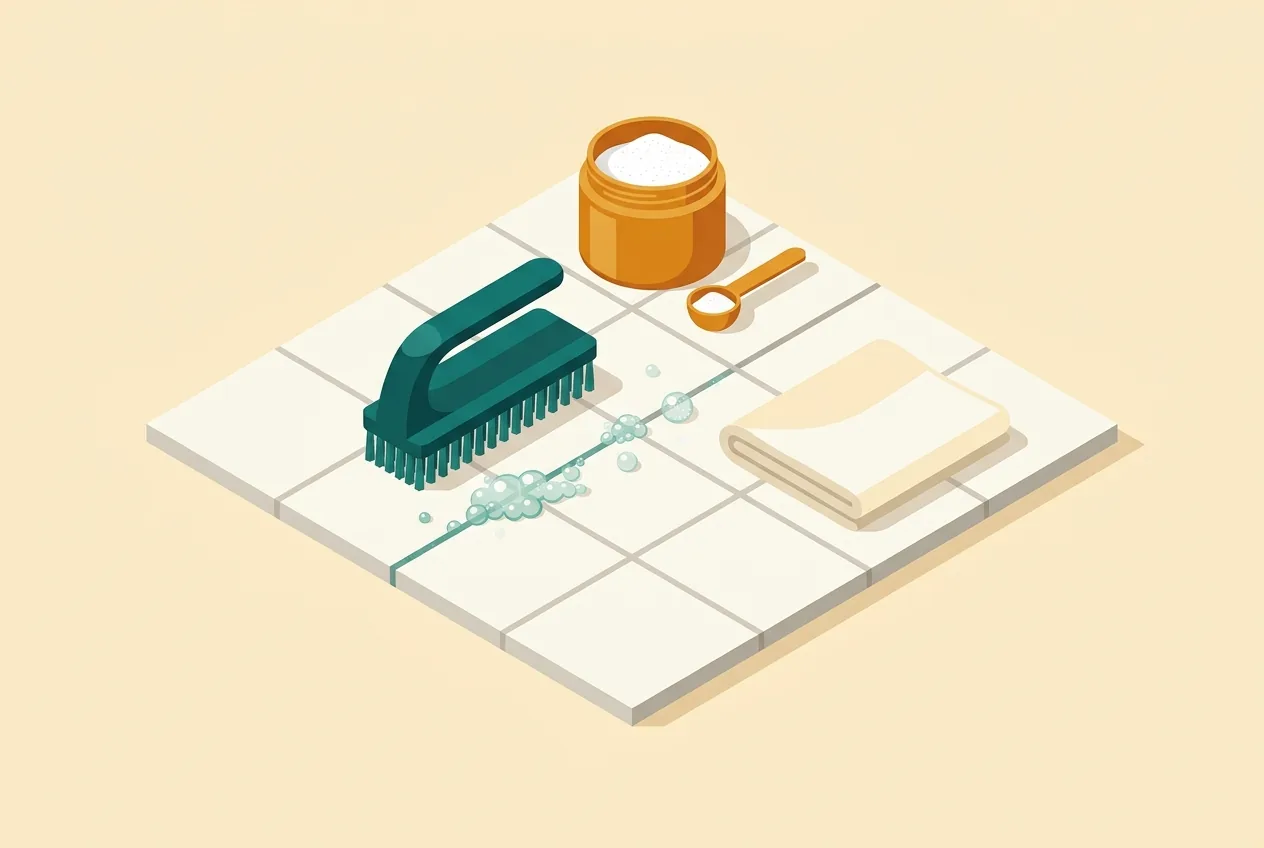
Nylon grout brush or stiff old toothbrush
Baking soda and 3% hydrogen peroxide or oxygen bleach powder (sodium percarbonate)
Clean microfibre cloths or old bath towels for drying
A penetrating grout sealer once lines are clean and dry
Step 1 — Lift soap scum and greasy dirt with dish soap first
Just like kitchen grease or oily shower film, bathroom floor grout often holds a thin layer of body oil, conditioner and mop-water detergent that blocks brightening cleaners from soaking in.
Sweep or vacuum loose grit so scrubbing does not scratch glazed tiles.
Mix a few drops of clear dish soap into a bowl of warm water.
Work along the grout lines with a nylon brush for a couple of minutes, then wipe away the dirty suds with a damp cloth.
Why this works: Dish soap is pH-neutral and cuts greasy film without attacking cement binders or nearby metal trims. For dark spots caused by dampness rather than foot traffic, compare our guide to removing returning shower grout mould.
Step 2 — Brighten discoloured grout safely with oxygen bleach
Skip hydrochloric acid and chlorine bleach. Oxygen-based cleaners lift organic stains and brighten cement grout gently without dissolving the mortar.
For ceramic or porcelain tiles: Dissolve 2 tablespoons of oxygen bleach powder (sodium percarbonate) in 500 ml of warm water — or mix baking soda with enough 3% hydrogen peroxide to form a spreadable paste. (If you have natural stone tiles like marble or travertine, skip peroxide/acids and stick to a stone-safe pH-neutral alkaline grout cleaner instead.)
Spread the solution or paste along the grout lines and leave it to dwell for 15 minutes (keep it damp, not baked dry).
Scrub lightly along the lines with your nylon brush, then rinse twice with clean water and blot dry with towels.
Why this works: Oxygen bleach releases active oxygen bubbles inside porous grout, breaking down organic pigments from spills and soap residue while keeping cement mortar structurally sound.
Step 3 — Dry thoroughly and seal the pores
Clean unsealed grout acts like a sponge for dirty mop water, undoing your work within weeks — and lingering moisture invites the bathroom odour and mould problems covered in our moisture-control hub.
Allow cleaned grout to air-dry completely for at least 24 hours (run a fan if humidity is high).
Test whether sealer is needed: flick a few drops of water onto a line. If water beads up, the old sealer is intact; if it darkens and soaks straight in, brush or roll on a clear penetrating grout sealer following the bottle instructions.
Wipe any excess sealer off the tile faces before it dries hazy.
Grout cleaners compared: safe vs destructive
Common grout cleaning methods compared
Cleaner
Clears grime?
Safe for cement grout & trims?
Main risk
Clear dish soap + warm water
Removes greasy soil film
Yes
Won't lift deep set dye or organic stains alone
Oxygen bleach (sodium percarbonate)
Brightens organic & traffic stains
Yes (on ceramic/porcelain)
Test dyed grout first; keep off unsealed stone/wool
Baking soda + 3% hydrogen peroxide
Good spot brightener
Yes (on ceramic/porcelain)
Don't scrub aggressively on soft glazed or stone tiles
Dedicated alkaline tile & grout cleaner
Strong on embedded grease & dirt
Yes, when label-matched
Needs thorough plain-water rinsing
Hydrochloric toilet bowl cleaner
Etches top layer bright temporarily
No — dissolves cement
Crumbly grout, etched stone, pitted chrome drains
Bleach-gel toilet cleaner
Surface whitening only
No — risky
Fades coloured grout; toxic chlorine gas risk if mixed
Quick rule: if a cleaner's label warns against contact with metal, stone or masonry, keep it inside the vitreous-china toilet bowl where it belongs.
Do
Check whether your tiles are ceramic/porcelain or acid-sensitive natural stone first.
Scrub along grout lines with a nylon brush — never wire bristles that gouge mortar.
Seal clean, bone-dry grout every 6–12 months so spills stay on top. Got a fresh wine, coffee or grease spill on tile right now? Check our interactive Stain Solver for safe first steps.
Don't
Squeeze toilet bowl gel onto bathroom floors or shower wall grout.
Mix vinegar, citric acid or bowl cleaner with chlorine bleach or ammonia.
Seal over damp, dirty or mouldy grout — sealing locks stains and moisture inside.
When grout can't be cleaned and needs repair
Stop scrubbing and plan a repair if any of these show up after drying:
Sandy crumbling or missing chunks: Acid erosion or age has broken the cement matrix. Scrape loose mortar out with a grout saw and re-grout the damaged lines.
Permanent uneven bleaching: If toilet cleaner stripped pigment from tinted charcoal, beige or grey grout while leaving the mortar firm, a grout colourant sealer (an epoxy-acrylic paint formulated for grout) restores uniform colour and seals at the same time.
Cracked corner joints where wall meets tub or floor: Never pack cement grout into change-of-plane corners — those joints flex and require 100% silicone bathroom sealant instead.
FAQ
Is toilet bowl cleaner safe on tile grout?
No. Most toilet bowl cleaners rely on strong hydrochloric acid or thick sodium hypochlorite engineered for glazed vitreous china. Acid dissolves cement grout binders and etches stone or chrome trims, while bleach gel weakens grout colour and creates fume hazards in enclosed bathrooms.
What if I already used toilet bowl cleaner on my grout?
Rinse thoroughly with plain water, wipe once with a mild baking soda and water solution to neutralise lingering acid, and let it dry for 24 hours. If the grout stays firm and hard, apply a penetrating grout sealer; if it crumbles like loose sand under a fingernail, plan to re-grout those lines.
Does bleach-gel toilet cleaner also damage grout?
Yes. Thick chlorine bleach gel strips colour from tinted grout, corrodes metal drain covers, and leaves residual hypochlorite in porous lines that can release chlorine gas if an acidic cleaner touches it later.
What cleans dirty grout best without eroding it?
Wash away greasy film first with warm water and clear dish soap, then let an oxygen-bleach solution (sodium percarbonate) dwell for 15 minutes before brushing with a nylon brush and rinsing clean.
Why harsh cleaners strip finishes along with dirt, and gentle alternatives that actually work.
Written by Miah Elias, home cleaning researcher and writer. Methods are checked against tile-council guidance and basic surface chemistry. This guide contains no affiliate links yet — products are named by type so you can choose any brand.