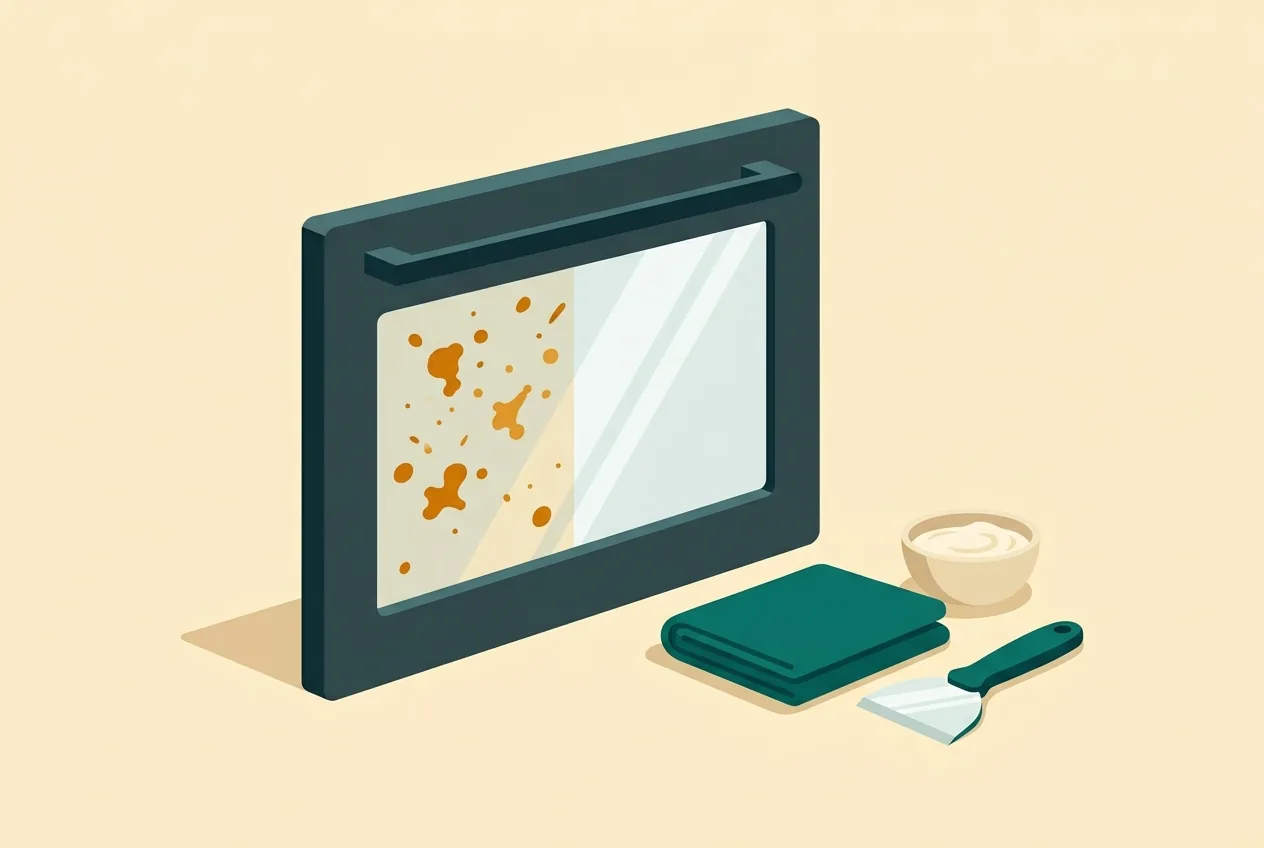
Burnt Grease on a Glass Oven Door? Clean Baked-On Film Without Scratching
By Miah Elias · Published 26 November 2026 · About 7 minutes
Baked-on oven grease turns into a hard amber varnish — keeping alkaline paste moist and verifying plain glass avoids scratches and wasted scrubbing.
Quick answerLet the oven cool completely and check with a fingernail whether the brown film sits on the inner surface or is trapped between the glass panes. Degrease loose oil with clear dish soap, spread a damp baking soda and water paste covered with cling film for 45–60 minutes (never spray vinegar on top while it works), then wipe clean. On plain uncoated tempered glass only, finish stubborn dark dots with soapy water and a fresh single-edge steel razor blade held flat at 30 degrees.
Read this first — four mistakes that ruin oven glass and seals
Check for coated or heat-reflective inner glass first. Many modern ovens use a subtle iridescent or tinted low-emissivity (low-E) coating on the inner pane to hold heat inside. Razor blades, abrasive scouring pads and strong lye oven sprays strip that coating permanently.
Never run a pyrolytic self-clean cycle with oven cleaner residue inside. High heat bakes chemical residue into permanent cloudy streaks and releases acrid fumes.
Keep alkaline paste and lye sprays off rubber door gaskets and aluminium trim. Caustic cleaners dry out rubber seals and pit brushed metal frames around the glass.
Never scrape dry glass. A dry razor blade drags carbon grit across the pane and leaves permanent arc scratches.
Why standard sprays glide off oven door glass
Every roast or tray of chips sends fine fat droplets onto the hot glass door. At 180–230°C, cooking oil rapidly cross-links with oxygen into a hard, amber resin — a much harder, heat-cured version of the polymerised grease on wooden kitchen cabinets. Washing-up liquid clears the tacky outer film, yet leaves the baked brown lacquer untouched.
Two common internet tricks fail here for simple chemistry reasons. First, spreading baking soda paste and letting it dry out into a crust after 15 minutes stops the mild alkali from softening the resin. Second, spraying white vinegar onto baking soda for "extra fizz" instantly neutralises both cleaners into salty sodium acetate water and harmless carbon dioxide bubbles — the exact same neutralisation mistake that ruins results when cleaning a burnt stainless steel pan.
First: run the 20-second location & glass check
Step A: Run a fingernail over the inside glass
Can you feel raised amber dots or tacky ridges directly under your fingertip?
↓
Feels rough on top — film is on the inner face
Check your manual for a low-E coating; if it is plain tempered glass, covered baking soda paste + wet scraping will clear it.
↓
Feels glass-smooth while streaks stay visible inside
Grease dripped down the top door vents between the double-glazed panes. You must unclip the top door trim to clean between the glass.
What you'll need
Clear liquid dish soap and warm water (free first degreasing pass)
Baking soda (bicarbonate of soda) and a sheet of cling film or damp kitchen towel
Non-scratch microfibre cloths or a blue non-scratch nylon pad
Optional for plain uncoated glass only: a fresh single-edge steel safety razor scraper (never a rusty blade or utility knife)
Step 1 — Degrease loose oil, then lock moisture into baking soda paste (free)
Remove any loose surface grease first so the baking soda paste touches the baked carbon directly.
Open the cooled oven door flat and wipe the glass with a warm cloth and two drops of clear dish soap, then wipe dry.
Stir half a cup of baking soda with just enough warm water to make a thick, spreadable paste (about the texture of toothpaste).
Spread the paste smoothly across the glass, keeping it 1–2 cm away from the rubber door seal and metal hinges.
Press a layer of cling film (or damp paper towels) lightly over the paste and leave it for 45 to 60 minutes (or 3–4 hours on heavy dark corners). Keeping water trapped stops the paste drying into useless powder.
Peel off the wrap and work the wet paste gently in circles with a non-scratch nylon sponge or damp cloth, then wipe everything clean with plain warm water.
Why this works: Kept damp, sodium bicarbonate stays gently alkaline (around pH 8.3–9) long enough to saponify and soften baked fats without pitting metal or choking the kitchen with caustic fumes. Afterwards, launder your greasy microfibres with the clear dish soap and lipase enzyme wash used for greasy fabrics so they do not transfer oil next time.
Step 2 — Use the wet razor blade method safely (plain glass only)
If thin, glassy brown freckles survive Step 1, mechanical shaving is far safer for your wrists and seals than heavy caustic sprays — provided your inner glass has no factory low-E coating and stays wet, the same scratch-prevention rule used before testing mineral scale on uncoated shower glass.
Spray the glass generously with warm water and a drop of dish soap so a visible wet film coats the pane.
Insert a brand-new single-edge steel blade into a flat glass scraper handle (do not use old blades, serrated blades or corners).
Hold the blade at a shallow 30-degree angle — almost flat against the glass — and push forward in short, light strokes. You will see clean brown curls peel right off.
Re-spray soapy water whenever the glass looks dry, keep the blade strictly off plastic trim and rubber seals, and wipe debris onto a damp paper towel as you go.
If a faint cloudy smear remains at the end, mist a clean cloth with 50/50 white vinegar and water after all baking soda is rinsed away, then buff dry.
Oven glass methods compared
Burnt oven door grease methods compared
Method
Cuts baked brown crust?
Safe on coated glass & seals?
Main risk
Covered damp baking soda paste (45–60 min)
Good on light to medium build-up
Yes (keep off rubber seals)
Stops working if left to dry uncovered
Wet 30° single-edge steel razor scraper
Best on rock-hard carbon dots
Plain uncoated glass only
Scratches if dry, rusty, or used on low-E glass
Baking soda + vinegar sprayed together
Weak — neutralises itself
Yes
Wastes time; fizz does no real degreasing
Lye / heavy-duty oven spray + cling film
Dissolves multi-year carbon
Risky — etches metal & coatings
Harsh fumes; damages self-cleaning/low-E panes
Damp compressed dishwasher tablet
Good on plain glass
Can scuff coatings & aluminium
Grit scratches soft trims; harsh on bare skin
Tip: if cooking oil dripped onto a wool rug or sofa cushion while lifting trays out, check our surface-safe stain removal guides before blotting.
Do
Wear rubber gloves when scraping or handling strong alkaline pastes.
Lay an old towel beneath the hinged oven door to catch dirty drips off the floor.
Wipe the inside glass every few weeks while warm (not hot) with dish soap before spills carbonise.
Don't
Spray heavy oven cleaner onto door vents, hinges or rubber seals.
Use green scouring pads, steel wool or Magic Erasers on tinted or coated inner panes.
Reassemble between-pane glass backwards — note which face points inward before sliding panels out.
Step 3 — If grease is trapped between the glass panes
Most double-glazed oven doors allow homeowners to slide out the inner glass without tools, or with two small Phillips screws along the top plastic trim. Check your model's manual first: open the door fully, flip down the locking latches on both bottom hinges if removing the entire door, or release the top retainer bar to slide the inner glass out onto a folded towel. Wash both faces gently with Step 1's paste, dry completely so moisture cannot fog inside later, and click the retainer firmly back into place.
When to call an appliance technician
Your door uses bonded sealed glass with no removable top retainer or hinge latches — forcing glued panes cracks tempered glass into thousands of pieces.
A hinge latch snaps or the door refuses to close flush against the rubber gasket after reassembly (heat loss ruins baking temperatures and scorches nearby cabinets).
Baked-on stains on a coated low-E inner pane have already peeled or turned iridescent rainbow-cloudy from previous caustic sprays.
FAQ
Should I spray vinegar onto baking soda paste on an oven door?
No. Baking soda works because it is mildly alkaline; pouring acidic vinegar on top neutralises it into weak salt water and gas bubbles. Keep the paste damp with plain water under cling film instead, then rinse well.
Will a razor blade scratch glass oven doors?
Not on plain uncoated tempered glass if the blade is brand-new, held flat at about 30 degrees, and pushed across soapy wet glass. Never use razor blades on low-emissivity coated panes, plastic frames or dry glass.
Why does my oven door still look brown and streaky after cleaning both sides?
Cooking steam and oil splatter enter the air vents along the top lip of the door and coat the hidden interior glass faces. Unclipping the top trim per your manual lets you slide the inner panel out and clean both sides cleanly.
Are dishwasher tablets safe for cleaning oven door glass?
They work mechanically on plain tempered glass because they pack alkaline detergent and mild abrasives, but wear gloves, keep them off metal trim and gaskets, and avoid coated inner panes that can scuff.
Spilled cooking oil or grease on clothes, carpet or wood floors? Check the first-60-seconds safety steps.
Written by Miah Elias, home cleaning researcher and writer. Methods are checked against appliance care guidance and basic chemistry. This guide contains no affiliate links — tools are named by type so you can use what you already own.