Red Wine on Synthetic Carpet? How to Lift Dried Stains Without Fuzzing or Rings
By Miah Elias · Published 29 November 2026 · About 7 minutes
Even tough nylon and polyester carpets fuzz permanently when scrubbed — cold blotting and weighted towel extraction pull pigment cleanly out of the backing.
Quick answerFirst make sure your carpet is synthetic rather than wool, and never pour baking soda or hot water onto red wine (alkali turns wine pigment blue-grey, and heat opens nylon dye sites). Rehydrate dried marks with plain cold water for 5 minutes, blot inward using 1 tbsp white vinegar + 1 tbsp clear dish soap in 2 cups cold water, rinse thoroughly cold, and finish with a weighted stack of dry white towels for 6+ hours so pink rings cannot wick back overnight.
Read this first — four mistakes that turn a wine spill permanent
Confirm you do not have wool or wool-blend pile first. Synthetic polyester and nylon tolerate spot oxidisers, whereas natural wool dissolves in chlorine bleach and felts if scrubbed — follow our wool carpet red wine guide if there is any wool in the blend.
Never dump baking soda straight onto red wine or combine it with vinegar. Red wine's anthocyanin dyes shift from ruby red to stubborn blue-grey in alkaline powder, and pouring vinegar over baking soda cancels both into salty water.
Never scrub or rub side to side. Vigorous scrubbing untwists heat-set staple yarns on nylon and polyester carpets, leaving a dull, fuzzy halo even after the pink colour vanishes.
Never skip a 10-minute hidden-corner test before using hydrogen peroxide. Solution-dyed polyester handles 3% peroxide easily, while acid-dyed nylon can lighten into a pale bleached patch if left wet.
Why "synthetic carpet" actually splits into two different stains
Most guides treat all synthetic carpet identically. In reality, knowing whether you have nylon or polyester / olefin (polypropylene) explains why one homeowner's wine lifts in five minutes while another's stays locked pink (or check our interactive Stain Solver if the spill happened seconds ago across any floor or fabric):
Acid-dyed nylon: Very springy and durable, yet nylon molecules carry open dye receptor sites. Hot water, steam cleaners, and alkaline cleaners lock red wine tannins tightly into those dye sites — and strong peroxides or ammonia can strip the factory carpet colour.
Solution-dyed polyester, triexta and olefin: Pigment is melted right into the liquid plastic before spinning, so 3% hydrogen peroxide or sodium percarbonate rarely bleaches the carpet itself. However, polyester yarns crush and flatten if rubbed, and olefin holds greasy residues if soap is left un-rinsed.
First: check what already touched the spot
Step A: Look closely at the stain colour and pile texture in daylight
Is the mark still deep burgundy/pink, or did earlier baking soda or carpet spray turn it dark blue-grey?
↓
Untreated dried burgundy or light pink stain
Start directly at Step 1 (cold rehydration + diluted vinegar and clear dish soap blotting + weighted drying).
↓
Turned muddy blue-grey after baking soda, or stubborn ring after soap
Flush all alkaline powder out with repeated plain cold-water blotting first, restore mild acidity with Step 2, then extract deep backing moisture in Step 3.
What you'll need
Clean white cotton towels and thick white paper towels (free — never coloured cloths that bleed dye)
Cold tap water in a spray bottle (free)
Distilled white vinegar and clear mild liquid dish soap
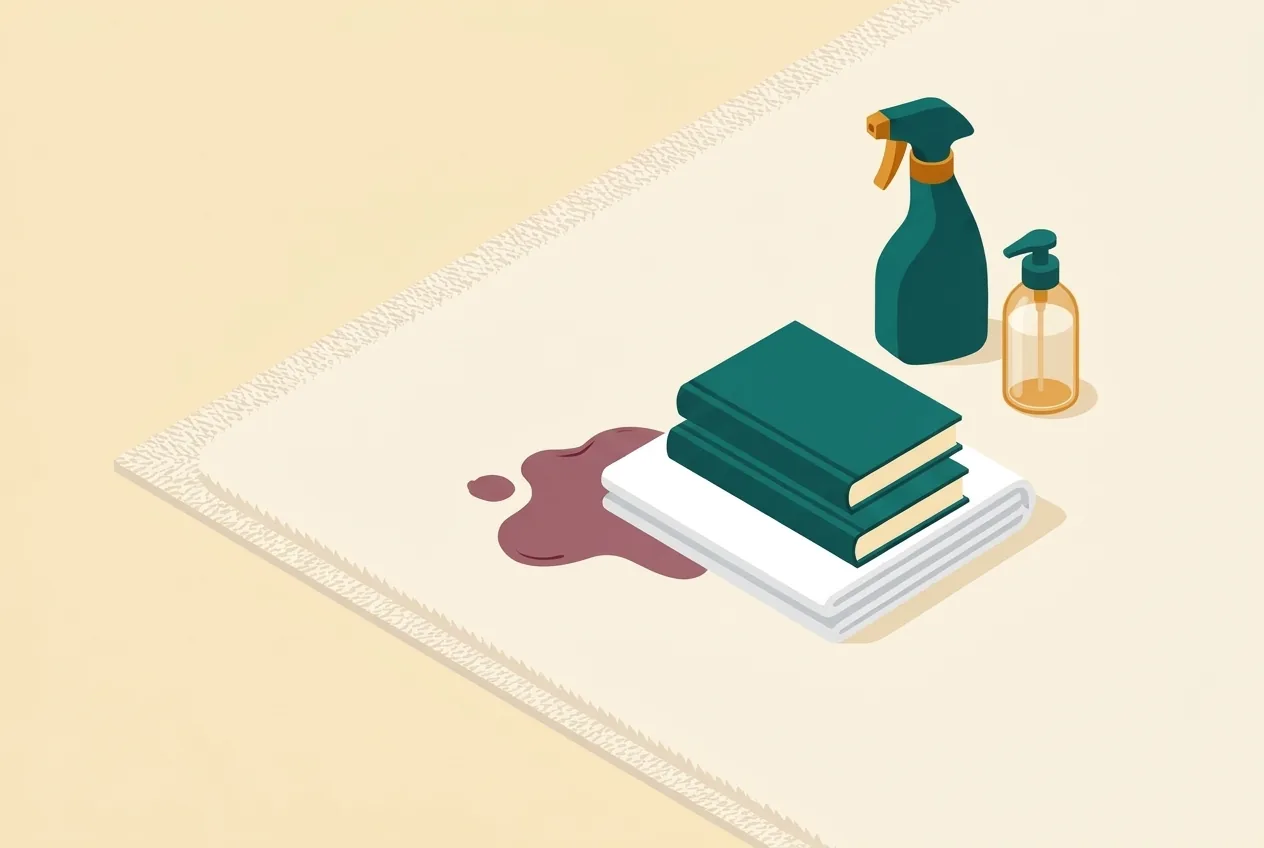
Two heavy hardcover books on a plastic bag (for weighted wick-back extraction)
Optional for lingering pink shadows: oxygen bleach (sodium percarbonate) or 3% hydrogen peroxide (light/colourfast synthetics only)
Step 1 — Rehydrate dried wine with cold water (free)
If dried grape pulp or crusty sugar sits on top, lift loose flakes gently with the edge of a spoon and vacuum without rubbing.
Mist plain cold water lightly over the stain — just enough to dampen the yarns without flooding down into the foam underlay pad — and wait 5 minutes.
Press a folded dry white towel straight down with flat palms for 10 seconds, lift, turn to a clean dry square, and press again until transfer slows.
Step 2 — Lift pigment with vinegar + clear dish soap, then rinse cold
Mix 1 tablespoon of distilled white vinegar and 1 tablespoon of clear dish soap into 2 cups (500 ml) of cold water. (Do not sprinkle salt or baking soda onto the carpet.)
Dip a clean white cloth into the solution, wring until damp rather than dripping, and dab from the outer edge inward so the red ring cannot widen.
Let it dwell for 5 minutes, then blot firmly upward with a dry white towel. Repeat 3–5 rounds while pink colour continues lifting onto the cloth.
If earlier baking soda turned the stain blue-grey: blot thoroughly with plain cold water twice to flush trapped alkali out first, then apply the vinegar-soap mix so mild acidity shifts pigment back to liftable ruby-pink.
Mandatory cold rinse: Sponge gently with a clean cloth wetted in plain cold water and blot dry twice. Soap residue left in synthetic pile acts like a dirt magnet, turning the clean spot grey within weeks.
Why this works: Mild acetic acid keeps anthocyanins soluble in water instead of locking onto nylon dye sites, while clear dish soap breaks down wine tannins and grape sugars without leaving optical brighteners or heavy foam behind.
Step 3 — Target remaining pink shadows and stop wick-back
If a faint pink shadow remains once mostly clear: Test your chosen oxidiser inside a dark closet corner for 10 minutes first.
Safer all-synthetic option: Dissolve ½ teaspoon of sodium percarbonate (oxygen bleach powder) in 1 cup of cool-to-lukewarm water, blot lightly onto the pink shadow, wait 20–30 minutes (never hot), then blot out thoroughly with plain cold water.
For pale solution-dyed polyester or tested light nylon only: Lightly mist 3% hydrogen peroxide (or dab 2 parts 3% peroxide + 1 part water) onto the shadow, wait 15 minutes away from bright sun, and blot clean with a cold damp cloth.
Weighted towel extraction (do not skip): Stack 4–6 folded dry white paper towels or a thick white bath towel directly over the damp patch, lay a plastic bag on top, and press two heavy books on it for at least 6 hours or overnight. Capillary suction pulls deep backing moisture into the paper so dissolved pink pigment cannot rise back onto the yarn tips as the carpet dries — the exact overnight safeguard detailed in our dried coffee and tea carpet guide.
Remove the towels, run a floor fan across the carpet until bone-dry, and gently fluff the tufts upright with your fingers or a vacuum hose.
Did red wine splash onto nearby cushions at the same time? Always check W, WS, S or X upholstery tags first in our red wine on a sofa guide before wetting cushions.
0–10 minutes · Cold
Rehydrate & blot
Mist plain cold water onto dried wine and press straight down with dry white towels — zero rubbing.
15–45 minutes · Lift
Vinegar + clear soap
Dab 1 tbsp vinegar + 1 tbsp clear dish soap in 2 cups cold water from outside inward, then rinse cold.
6+ hours · Extract
Weight + fan dry
Press dry white towels under heavy books overnight so deep backing pigment cannot wick back up.
When to call a carpet cleaner
Half a bottle or more soaked straight through the backing into the foam underlay and keeps wicking up wide pink circles after two weighted towel extractions.
Aggressive scrubbing previously untwisted and fuzzed the yarns — a carpet repair specialist can sometimes shear lightly or patch-graft a closet donor square seamlessly.
Earlier chlorine bleach or strong spotter bleached a white halo into coloured nylon carpet (a professional colourist can re-dye small bleached nylon spots, whereas home dyes rarely match).
FAQ
Why did baking soda turn my red wine carpet stain blue or grey?
Red wine anthocyanins change colour with pH. Alkaline baking soda shifts ruby pigment into a muddy blue-grey colour that clings harder to nylon fibres. Flushing out the powder with cold water and treating with diluted vinegar and clear dish soap reverses the shift.
Is hydrogen peroxide safe on all synthetic carpets?
Always run a 10-minute hidden-corner test first. Solution-dyed polyester and olefin resist 3% hydrogen peroxide well, whereas acid-dyed nylon — especially darker shades — can fade or turn pale if peroxide sits wet.
Why did the pink wine ring reappear after the carpet dried?
That is wick-back: moisture deep in the carpet backing rose back to the yarn tips while drying and deposited dissolved pink pigment on top. Weighting folded white towels under heavy books for 6+ hours pulls that moisture into the towels instead.
Does pouring white wine or salt remove a dried red wine stain?
No. Salt cannot lift dried pigment and leaves gritty crystals inside the pile, while white wine adds extra sugar and moisture. Plain cold water rehydrates dried wine cleanly for free.
Compare cold-water, enzyme and solvent safety rules across clothes, mattresses, upholstery and hard floors.
Written by Miah Elias, home cleaning researcher and writer. Methods are checked against carpet fibre dye guidance and basic stain chemistry. This guide contains no affiliate links — ingredients are named generically so you can start with cold water, vinegar and clear dish soap.