Fridge Still Smells Rotten After Cleaning? Find Hidden Traps and Plastic Odours
By Miah Elias · Published 28 November 2026 · About 7 minutes
Wiping glass shelves misses the drip pan, defrost drain hole and pleated rubber seals where spilled food liquids hide.
Quick answerWhen a fridge still smells rotten after wiping the shelves, the stench is almost always hiding in one of four missed places: the evaporator drip pan underneath or behind the unit, the back-wall defrost drain hole, the pleated folds of the rubber door gasket, or the freezer air-return vents. Unplug the fridge, wash those mechanical traps with warm soapy water and an enzyme wipe (or 1:1 distilled vinegar), then ditch the tiny baking soda box for trays of plain activated charcoal inside an empty fridge for 48–72 hours.
Read this first — four fridge cleaning mistakes that make smells worse
Never mix chlorine bleach with white vinegar inside an enclosed fridge. Acid and bleach react immediately to release hazardous chlorine gas in a tight, unventilated cabinet — the exact safety rule covered in our dishwasher biofilm and odour guide.
Keep undiluted bleach and strong solvents off rubber door seals and ABS plastic. Heavy chlorine dries out magnetic gaskets and cracks brittle crisper drawers over time.
Never pour boiling water down the interior defrost drain hole. Sudden thermal shock can split plastic drain tubing behind the rear liner, sending dirty water onto kitchen flooring or into cabinet insulation.
Never use charcoal barbecue briquettes containing lighter fluid. Instant-light briquettes release petroleum fumes that contaminate plastic liners permanently; use plain aquarium/filter activated carbon or additive-free hardwood charcoal only.
Why shelves look spotless while the fridge still reeks
Every refrigerator relies on gravity and circulating air. When raw chicken juice, milk or rotting salad liquid drips off a shelf, it rarely stays where you can see it. Liquids seep underneath removable shelf brackets, trickle into the rear condensation gutter, slide down the defrost drain tube, and land straight in the evaporator drip pan resting right over the warm compressor motor.
Even after every spill is scrubbed out, volatile amines (such as putrescine and cadaverine from meat) and butyric acid from spoiled dairy diffuse shallowly into porous ABS plastic liners and rubber seals. As soon as the fridge door closes, cold stagnant air concentrates those trapped vapours — and vanilla extract or essential oils only layer sweet perfume over rot for a day or two.
First: track down where the smell is actually coming from
Step A: Sniff the lower back grille, door seal folds and freezer vents separately
Pinpoint whether the odour lives in a hidden tray, a food-contact crevice or the plastic itself.
↓
Strongest behind/underneath the fridge or around the bottom crispers
Check the evaporator drip pan and flush the back-wall defrost drain hole — spoiled liquid is sitting warm outside the cooled box.
↓
Only noticeable inside when the door opens (especially in the freezer too)
Clear spoiled residue from gasket pleats, drawer runners and air vents, then adsorb plastic-bound vapours with activated charcoal.
What you'll need
Warm tap water and clear mild liquid dish soap (free)
Old toothbrush, cotton buds and clean microfibre cloths (free)
A turkey baster, plastic syringe or small funnel (for flushing the rear drain hole safely)
Distilled white vinegar (1:1 with water) or 3% hydrogen peroxide, plus an unscented bio-enzymatic cleaner if raw meat or milk leaked
Plain activated charcoal pellets (pet-shop aquarium filter carbon works brilliantly) or black-and-white newspaper sheets
Step 1 — Empty, unplug and strip every removable trap (free)
Empty both the fridge and freezer completely into cool boxes and unplug the appliance from the wall. Leave both doors propped wide open so trapped cold air warms up — cold plastic hides smells you can easily detect at room temperature.
Pull out every glass shelf, crisper bin, door balcony and plastic sliding rail. Check the underside grooves of glass shelf trims; dairy and blood often wick between glass and white plastic edging where cloths never reach.
Wash all removable bins and shelves in the sink using warm water and clear dish soap, following basic food-zone hygiene across our kitchen cleaning guides, then set them aside to air-dry completely.
Step 2 — Clean the three hidden mechanical traps
Pull out the evaporator drip pan: Pull the fridge away from the wall (or unclip the front kickplate grille on built-in/American-style units). Locate the shallow plastic tray sitting directly above or beside the black compressor. Unclip or slide it out carefully (or use a turkey baster and towels if bolted down), wash out any dark sludge with hot dish soap, wipe with 3% hydrogen peroxide, rinse and dry.
Flush the back-wall defrost drain hole: Above the crisper drawers on the back interior wall sits a small V-shaped gutter with a drain hole. Clear out any food crumbs with a cotton bud or flexible straw brush, then squirt a cup of warm (never boiling) water with 2 drops of clear dish soap down the hole with a turkey baster until it drains cleanly into the pan below.
Clean inside the rubber door gasket pleats: Gently peel open every accordion fold along all four sides of the fridge and freezer doors. Wipe out black mould specks and dried drips using clear dish soap and a soft toothbrush, then wipe with 3% hydrogen peroxide and dry thoroughly — the same gentle gasket care explained in our rubber appliance seal cleaning guide.
Step 3 — Neutralise protein films and pull vapours out of plastic
For leaked meat juice, fish or sour milk: Spray an unscented bio-enzymatic cleaner onto plastic seams, shelf tracks and the drip pan, wait 15–20 minutes while enzymes digest lingering protein chains, then wipe clean with a damp plain-water cloth and dry. (Enzymes actively break down organic odour sources, just like the deep protein treatment in our stubborn odour crystal guide.)
For general stale food odours: Wipe all interior walls, ceiling vents and door liners with a cloth dampened in 1:1 distilled white vinegar and water, leave for 10 minutes, then wipe with clean water and buff bone-dry. Never mix vinegar with bleach.
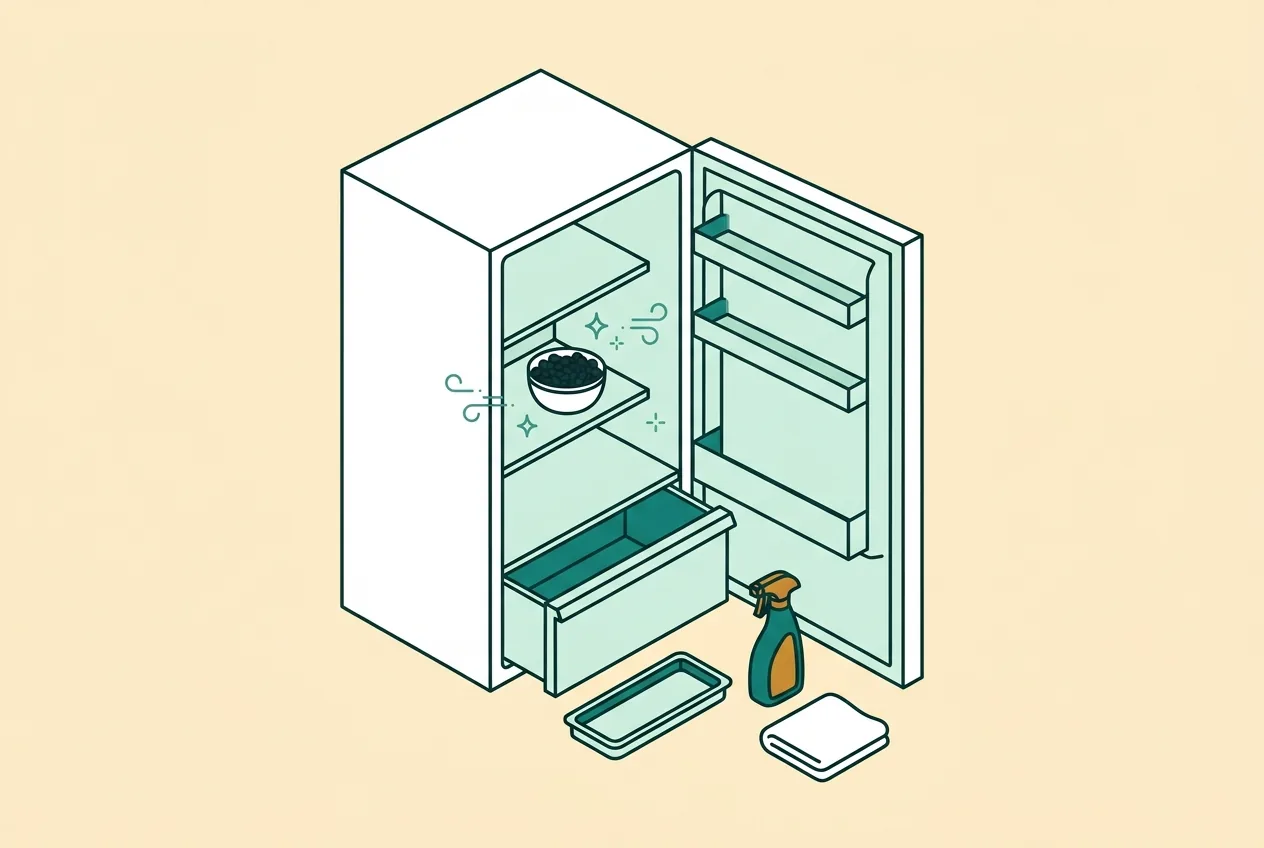
Adsorb embedded plastic odours (skip tiny baking soda boxes): Spread plain activated charcoal pellets across two or three shallow bowls or baking trays on the empty shelves (and one in the freezer). Close the doors, plug the fridge back in, and let it run empty for 48–72 hours. Free alternative: tightly ball up plain black-and-white newspaper sheets, lightly mist them with plain water so they feel barely damp, pack every shelf and drawer full, and leave shut for 4–5 days while the porous newsprint pulls vapours out.
Why this works: Activated charcoal contains millions of microscopic carbon pores per gram that trap heavy amine and sulphur gas molecules far more aggressively than an open box of sodium bicarbonate — the exact same reason charcoal trays outperform baking soda bowls when removing musty smells from wooden dresser drawers — while wiping out the warm drip pan removes the source continually pumping fresh odour back through the vents.
Fridge odour removers compared
Common fridge deodorisers compared for severe spoiled-food smells
Method
Removes rotten meat/milk smell?
Safe for plastic & seals?
Best use
Drip pan + drain flush + enzyme wipe
Yes — removes physical source
Yes
Mandatory first step for any leak or power outage
Activated charcoal on open trays (48–72 hrs)
Yes — high vapour adsorption
Yes (use plain carbon only)
Odour baked into empty plastic liners
1:1 white vinegar wipe (rinsed dry)
Moderate surface deodoriser
Yes (avoid mixing with bleach)
After physical grime is washed off
Open box of baking soda
Weak — tiny surface area
Yes
Mild everyday maintenance only, not rot
Vanilla extract / coffee grounds / essential oils
Masks smell temporarily
Oils can taint butter/ice
Skip — hides whether real rot remains
Always discard ice cubes and change the fridge water filter if a severe freezer thaw happened — porous ice absorbs foul freezer vapours quickly.
Hour 1 · Strip & scrub
Clean hidden traps
Unplug, pull drawers and glass trims, empty the rear drip pan, flush the defrost drain and scrub door seal folds.
Hour 2 · Enzyme pass
Break down proteins
Treat meat or dairy tracks with an unscented enzyme wipe, rinse with plain water and buff the interior completely dry.
Days 1–3 · Empty run
Adsorb plastic fumes
Set open trays of plain activated charcoal on empty shelves for 48–72 hours before restocking fresh food.
When a fridge cannot be saved (the insulation check)
You cleaned the drip pan, drain hole, door gaskets, shelf trims and freezer fan cover thoroughly, ran activated charcoal for 3–4 days, and left the unit unplugged and aired out — yet a sharp, sickly meat stench returns within hours of closing the door.
You spot dark brown staining seeping behind a cracked interior wall seam, broken screw hole or rear evaporator housing. Once raw meat blood or milk saturates the closed-cell polyurethane foam insulation inside the walls, no surface wipe or ozone machine can reliably reach inside the foam, and replacement (or an insurance claim after a prolonged power cut) is usually the only honest fix.
FAQ
Why does my fridge still smell like rotten food after I bleached the shelves?
Leaked meat juice or dairy rarely stays on the glass shelves. It drips down the back-wall defrost drain hole into the warm evaporator drip pan above the compressor, and hides inside folded rubber door seals and freezer air vents.
Why isn't an open box of baking soda removing the rotten fridge smell?
A tiny open carton exposes almost no powder surface to circulating air. Plain activated charcoal pellets spread across shallow plates or trays adsorb orders of magnitude more odour molecules from plastic liners.
Can I mix vinegar and chlorine bleach inside a smelly refrigerator?
Never. Mixing acid and bleach inside an enclosed fridge cabinet creates toxic chlorine gas, and concentrated bleach dries out rubber door gaskets.
How do I tell if spoiled meat juice soaked into the fridge's foam insulation?
If every removable drawer, gasket fold, drain line and drip pan is spotless and odour-free, yet the empty cabinet still smells sharply putrid after 72 hours of activated charcoal, spoiled liquid likely seeped behind a liner crack into the internal wall insulation.
Kill spores on delicate surfaces with wrung dish soap and 3% hydrogen peroxide while stopping moisture buildup.
Written by Miah Elias, home cleaning researcher and writer. Methods are checked against appliance maintenance guidance and basic odour chemistry. This guide contains no affiliate links — ingredients are named generically so you can start with soap, vinegar and plain carbon.